
Arrest Warrants in Hawaii County
Every Hawaii County arrest warrant begins with a judge, not a public wanted notice. Hawaiʻi Rules of Penal Procedure Rule 3 permits an application supported by a declaration, affidavit, information, or complaint. The filing must state actual facts. Facts, not conclusions, are what establish probable cause. A District Court judge within the circuit reviews those grounds before authorizing an arrest. An oral sworn statement can also be recorded and transcribed under the rule. In the circumstances the rule describes, a judge may even authorize a duplicate warrant orally. Rule 9 then controls the warrant’s form and delivery. HRS §803-1 supplies the statutory baseline for arrest by warrant from a magistrate while recognizing legal exceptions. That structure is why a media notice is never the Hawaii County warrant itself.
Hawaii County Arrest Warrant Review
The judge needs facts, not conclusions. A Hawaii County complaint may frame the charge, while an affidavit or declaration supplies the sworn detail. The judge then asks whether probable cause ties the named or described person to a real offense. Approval alone creates the authority to arrest.
Rule 3 and Rule 9: The application establishes probable cause; the signed warrant identifies the defendant and offense and directs authorized execution.
A Hawaii County docket may show the code PCAW. It means probable cause to issue arrest warrant. Treat the code as a clue, not a copy of the actual order. The application and affidavit behind it can stay sealed or restricted while investigative needs remain.
What a Hawaii County Arrest Warrant Contains
Rule 9 lists what the warrant must hold. It needs a judge’s signature, the defendant’s name or a usable description, the offense, and a command to arrest. A Hawaii County court record may also tie the order to an issue date, case ID, bail entry, and later return. Public access still varies with each record’s confidentiality status.
| Case reference | Third Circuit case ID or other identifier shown on the court record |
|---|---|
| Named subject | Name or description sufficient to identify the defendant |
| Offense | The charged or alleged offense identified by the order |
| Issuing authority | Judge’s signature and the District or Circuit Court connection |
| Bail or release | Case-specific amount or conditions, if set and publicly available |
| Issue and return | Dates or docket events showing issuance, service, or later court action |
Hawaii County Arrest Warrant Docket Limits
Start with the Judiciary’s Search Court Records page to reach eCourt Kōkua. A person search needs a first and last name. Middle-name, date-range, case-type, partial-match, and phonetic options stay optional. Case ID or citation searches cut mistaken matches. Still, a name result is not positive identification, as the Judiciary itself warns. This is case access, not a Hawaii County warrant roster. A docket event, hearing, PDF, or status line can flag the matter, though sealed documents, confidential applications, juvenile records, and protected investigative material may never appear. An ACTIVE label describes the case, not the warrant. Live operational status sits in the protected eBench Warrant system, reserved for approved agencies. If the public record is unclear, contact the issuing court or request the specific document. No online result proves a warrant is gone.
How Hawaii County Arrest Warrants Are Served
HPD serves as the county’s primary local police agency. Hawaii County has no separate sheriff’s office acting as a public warrant custodian. Under Rule 9, the warrant goes to the chief of police or another authorized person. Authorized officers may execute it anywhere in Hawaiʻi. HPD can also join state or federal partners in a coordinated operation. Rule 5 governs what happens next. The person must be taken without unnecessary delay before the court or a bail authority. The Third Circuit court then takes up counsel, release conditions, bail, and the next hearing. The arresting officer executes the order. That officer cannot set the warrant aside. Nor does the officer fix the final terms of release; those calls belong to the court. Note: Comply safely during an arrest and reserve challenges to identity, probable cause, service, or release for counsel and the court.
Hawaii County Arrest Warrant Operations
Service sometimes crosses agency lines. An official July 2024 HPD release told one story. It described an East Hawaiʻi operation joining HPD, the U.S. Marshals Hawaii Fugitive Task Force, and DOCARE. The release is a dated example of coordination, not a current Hawaii County warrant list. Federal and state authority stay separate. A Third Circuit warrant stays in state hands. Check it through Hawaiʻi Judiciary records and the issuing court. A federal warrant tied to the District of Hawaiʻi belongs to the federal court, PACER, and federal agencies. The Marshals may back a partner agency. That help does not turn every local arrest warrant into a federal case. The civic value lies in knowing which official custodian can confirm a Hawaii County order.
Arrest Warrant vs Summons vs Bench Warrant
Not every paper a Hawaii County court issues works the same way. An arrest warrant puts a person in custody once a judge finds probable cause. A summons just sets a court date. A bench warrant follows a missed duty in an existing case, and Hawaii County bench warrants explains how the court recalls one.
| Feature | Arrest Warrant | Summons | Bench Warrant |
|---|---|---|---|
| What It Orders | Arrest and prompt court presentation | Appearance at the stated time | Arrest for a missed court obligation |
| Basis | Probable cause of an offense | Formal notice to answer a case | Failure to appear or comply |
| Who Issues It | Judge or magistrate | Court through authorized process | Judge in the existing case |
| Response | Counsel, safe surrender, bail review, and hearing | Appear as directed | Appearance, recall, or quash process |
Request Hawaii County Warrant Records
When eCourt Kōkua turns up nothing, write to the court that holds the record. Hawaii County's neighbor-island process wants a named case. Describe the document precisely. Skip the payment for now. The court sends an invoice with return postage, and you prepay by an accepted certified method, since vague requests slow the response and restricted records may need a judge's approval. The official court-record contact page lists the Hilo and Kona Legal Documents Branches that hold Third Circuit records.
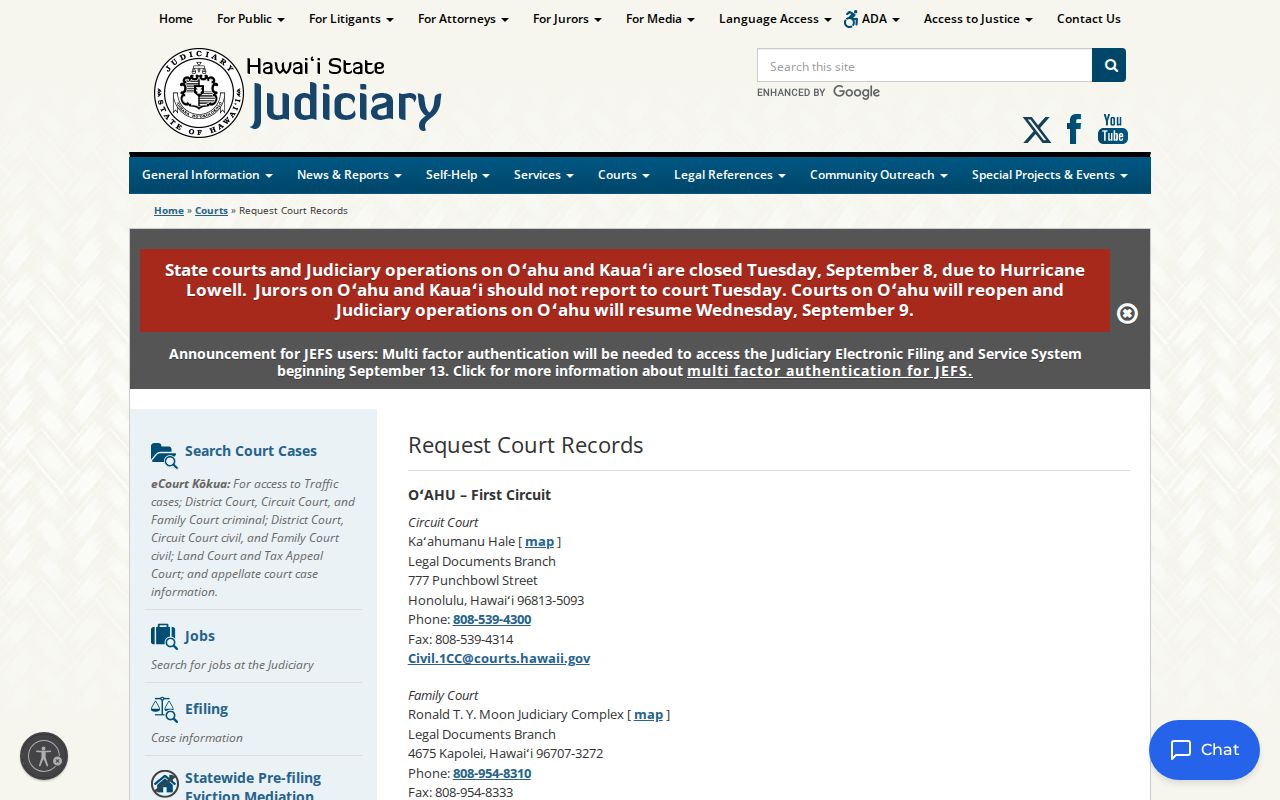
Use that contact list to reach the Hawaii County branch holding your case. Police files work differently. A reasonably described UIPA request to HPD gets whatever it can release, with exempt portions withheld and segregable public portions turned over when allowed.
Hawaii County Arrest Warrant Bail
Bail in Hawaii County starts with HRS Chapter 804. That chapter governs bail and release conditions. No fixed amount flows from the warrant itself. The charge matters. So does any court order, prior release status, and the circumstances of the case. A probation or conditional-release order may send the matter back to a judge, or carry no-bail language. The Third Circuit contact page says court bail processing runs on set weekday hours. Call first. Hilo and Kona route bail differently, and after-hours rules or no-bail conditions may not match routine processing. HPD executes the arrest order. The next decision belongs to the court or bail authority. A lawyer can tell you whether voluntary surrender, a hearing, or another planned step fits your Hawaii County case. Check instructions through the official Third Circuit directory. Circuit Court handles felonies. District Court handles misdemeanors within its statutory reach, and Family Court follows separate confidentiality rules. The Hilo and Kona Legal Documents Branches route circuit-level record requests, but a juvenile or protected family matter never belongs on the ordinary adult public-search path.
What to Do If There's a Warrant for You
Confirm the case, then move fast. Get the exact case ID, court, and docket. Then call a licensed attorney and the right Third Circuit clerk for current procedure in Hawaii County. Only the issuing authority controls the arrest warrant, not a third-party search result or a police news item.
- Verify the likely case through official Judiciary records and avoid relying on a name-only match.
- Ask counsel to confirm the order and explain safe voluntary-surrender options.
- Call the issuing court about current appearance, bail, and release procedures.
- Follow the court and law-enforcement directions. Keep proof of any later signed order or disposition.
Important: Speak with a lawyer before surrender. A current arrest warrant may be executed during any lawful contact with authorized law enforcement.
Hang up on any caller demanding payment. Scammers spoof real Hawaii County numbers, claim you missed court, and push gift cards or cryptocurrency. HPD has warned about this trick directly. Check the official HPD scam guidance and call the court yourself using published contacts. On the warrant side, a motion to recall or quash is not a fix for every case. Hawaiʻi court records show these motions, but the right remedy depends on the order. A lawyer can tell you whether to surrender, post bond, appear, or file. Keep your signed disposition, and confirm the agency recorded the court's action.